

How Much Does It Cost to Translate a Website?
The cost of translating a website is a key consideration for businesses looking to expand globally. Questions like, “How much does it really cost to translate my website?” and “What is the cost of a multilingual website?” often arise when planning for this investment.
The answer depends on several factors, including the total word count of your website, the languages involved, the level of customization needed, and whether you opt for machine or human translations—or a combination of both. Below, we’ll break down the costs and steps involved in translating your website effectively.
The Basics: Translation Costs and What They Cover
Website translation costs vary based on several factors, making it important for businesses to understand what influences pricing. Professional translation services typically charge on a per-word basis, with rates ranging from $0.09 to $0.30 per word, depending on the complexity and scope of the project. However, there are other elements to consider, such as localization needs, specialized content, and project deadlines.
Factors Influencing Translation Costs
1. Language Pairs
The cost of translation often depends on the languages involved:
- Widely Spoken Languages: Translating from English to popular languages like Spanish, French, or German is more affordable due to a larger pool of translators and lower demand-supply imbalance.
- Less Common Languages: Rare language pairs, such as Icelandic, Swahili, or indigenous languages, cost more because fewer professionals specialize in them.
- Bidirectional Complexity: Some language pairs are inherently more complex, especially when translating between languages with different scripts (e.g., English to Chinese or Japanese).
2. Specialized Content
Content type significantly impacts translation costs:
- Technical Content: Industries like engineering, IT, or science often require subject matter experts, raising the price.
- Legal and Medical Documents: These translations demand precision and adherence to specific terminologies, which can cost up to $0.50 per word or more.
- Creative Content: Marketing campaigns or brand storytelling often involve transcreation, a mix of translation and creative adaptation, which is more expensive than standard translation.
3. Turnaround Time
Urgency can increase costs:
- Standard Turnaround: Projects with flexible deadlines are more affordable.
- Rush Projects: Translators may charge a premium for tight deadlines, especially for large-scale or complex projects.
- Large Volumes: Discounts may be available for bulk word counts, but expedited services may negate these savings.
Types of Costs in Website Translation
Website translation projects typically involve two main types of expenses: translation costs and localization costs.
1. Translation Costs
This covers the direct translation of your website’s content, including:
- Product descriptions.
- Blogs and articles.
- Contact information and FAQs.
Translation costs are calculated based on the total word count and complexity of the text.
Example:
For a 10,000-word website:
- Low-end cost: $900 (at $0.09 per word).
- High-end cost: $3,000 (at $0.30 per word).
2. Localization Costs
Localization goes beyond translating words to ensure that the content is culturally relevant and functionally suitable for the target audience. It includes:
- Cultural Adaptation: Adjusting idioms, imagery, and tone to align with local norms.
- Formatting Changes: Modifying layouts to accommodate languages with longer text, such as German, or scripts that require additional spacing, like Chinese.
- Functional Testing: Ensuring the translated website works seamlessly, including navigation, forms, and interactive elements.
Example of Localization Costs: A website with multimedia elements like videos or infographics may require:
- Subtitle translation or voiceover dubbing.
- Visual adjustments to graphics or banners.
- Functional testing on various devices and browsers.
These additional services may add 15–30% to the overall project cost.
Professional Translation Services: Cost Breakdown
1. Traditional Agencies
Agencies like Translation Services USA charge between $0.15 and $0.30 per word. They often provide:
- Professional translators and editors.
- Style guides and glossaries.
- Linguistic QA to ensure accuracy and consistency.
2. ConveyThis
ConveyThis offers a more affordable solution by blending neural machine translation with optional human proofreading:
- Machine Translation Cost: As low as $0.004 per word.
- Human Proofreading Cost: Around $0.09 per word for high-quality translations in languages like Spanish, French, German, and Chinese.
Example:
A 2,500-word website translated into one language:
- Machine translation: $10.
- Human proofreading: $225.
This represents up to a 50% cost reduction compared to traditional translation agencies.
Reducing Website Translation Costs
1. Automated Translations with Human Refinement
Using tools like ConveyThis, you can generate initial translations with machine learning and refine them with human translators. This approach balances affordability with quality.
2. Community-Sourced Translations
If your website has an engaged community, you can invite users to contribute translations. However, ensure you have tools to oversee quality and consistency.
3. Focus on High-Priority Pages
Not all pages may need translation. Start with essential sections like:
- Homepage
- Product descriptions
- Checkout process
- Customer support FAQs
- Customer support
Web Technology Challenges and Costs
Building a multilingual website is not just about translating text—it involves addressing a variety of technical challenges to ensure the site functions seamlessly across languages and regions. Preparing your website for a multilingual experience requires careful consideration of encoding, frameworks, text handling, design adjustments, and SEO optimization. Below, we delve deeper into these common challenges and provide actionable solutions.
1. Technical Encoding
Encoding is the backbone of any multilingual website. To display characters from diverse languages correctly, your website must support a universal encoding standard.
Challenges:
- Many older websites use encoding standards that cannot support complex scripts or special characters, leading to display errors.
- Without proper encoding, languages with unique characters—such as Chinese, Arabic, or Cyrillic—will appear as garbled text.
Solutions:
- Adopt UTF-8 Encoding: UTF-8 is the most widely used encoding standard, capable of supporting virtually all characters and scripts.
- Verify Current Encoding: Check your website’s current encoding and update it if necessary. Most CMS platforms, like WordPress, offer built-in support for UTF-8.
- Test Across Languages: Conduct tests to ensure all languages display correctly on various devices and browsers.
Costs:
If your website was not designed with modern encoding in mind, you may face development costs to upgrade your system. However, the investment ensures long-term compatibility with a global audience.
2. Application Frameworks
Your website’s Content Management System (CMS) and backend frameworks must be capable of handling multilingual content efficiently.
Challenges:
- Storage Limitations: Some CMS platforms may not natively support storing multilingual versions of your content.
- Dynamic Content: Updating or synchronizing dynamic content, such as product catalogs or user-generated reviews, can become a complex task.
Solutions:
- Use Multilingual-Compatible Platforms: Platforms like WordPress, Shopify, Wix, and Squarespace offer plugins or built-in tools for multilingual management. ConveyThis integrates seamlessly with these platforms, enabling effortless language switching.
- Database Configuration: Ensure your database is structured to store and retrieve language-specific content effectively.
- Automation Tools: Implement tools that automate the process of detecting, storing, and managing multilingual content.
Costs:
Customizing your CMS or backend frameworks for multilingual capabilities may incur one-time setup costs. However, tools like ConveyThis reduce the need for extensive manual intervention, lowering ongoing expenses.
3. Text Extraction and Reintegration
Handling text strings for translation is a critical technical hurdle, especially for websites with dynamic or interactive elements.
Challenges:
- Extracting embedded text (e.g., within images or JavaScript files) can be time-consuming.
- Reinserting translated text without disrupting functionality requires careful planning.
Solutions:
- Automation Tools: Platforms like ConveyThis automate text extraction and reintegration, streamlining the translation process.
- Cloud-Based Translation Management: Use tools like SDL Trados or Smartling to manage text strings and ensure smooth reintegration.
- Minimize Embedded Text: Avoid embedding text in non-editable elements like images or videos. Use overlay text or captions instead.
Costs:
While automation tools simplify text handling, initial integration may involve development costs, particularly for custom-coded websites.
4. Visual Adjustments
Language differences can significantly impact your website’s design and layout. Some languages require more space, while others may alter the flow of content entirely.
Challenges:
- Text Expansion: French and Spanish text often expands by up to 30%, requiring more space in buttons, menus, and text boxes.
- Script-Specific Adjustments: Chinese and Japanese characters may need increased line spacing, while right-to-left (RTL) languages like Arabic and Hebrew require mirrored layouts.
- Responsive Design Issues: Multilingual content must remain responsive across devices, including mobile screens.
Solutions:
- Flexible Layouts: Design your website with adaptive layouts to accommodate varying text lengths and alignments.
- Dynamic UI Components: Use dynamic resizing for elements like buttons, tabs, and menus.
- Right-to-Left (RTL) Compatibility: For RTL languages, mirror the entire interface to maintain usability.
Costs:
Adjusting your website for multilingual visual requirements involves design and development efforts, but these are critical for ensuring a polished user experience across all languages.
5. Localization for SEO
Multilingual websites must be configured for search engine optimization (SEO) to rank effectively in different regions.
Challenges:
- Hreflang Tags: Without proper hreflang implementation, search engines may struggle to display the correct language version of your site.
- Localized Keywords: Direct translations of keywords may not align with regional search behavior.
- URL Optimization: URLs must be localized to improve search visibility.
Solutions:
- Hreflang Tags: Add hreflang tags to your site’s HTML to signal language and region-specific versions to search engines.
- Localized Content: Conduct regional keyword research to ensure your content targets relevant terms.
- SEO-Friendly URL Structure: Use subdirectories (e.g.,
example.com/fr) or subdomains (fr.example.com) for each language.
Costs:
Implementing multilingual SEO may require hiring SEO specialists or using platforms like ConveyThis, which include built-in SEO tools. These efforts are invaluable for driving organic traffic from international audiences.
So, “How much does it really cost to translate my website?” and “What is the cost of a multilingual website”.
To calculate the price of how much it will cost to translate/localize your website, obtain a total approximate wordcount of your website. Use the free online tool: WebsiteWordCalculator.com
Once you know the wordcount, you can multiply it on the per word basis to obtain the cost of the machine translation.
In terms of ConveyThis prices, the cost of 2500 words translated into one extra language would cost $10, or $0.004 per word. That’s the neural machine translation. To proofread it with humans, it will cost $0.09 per word.
Step 1: Automated Website Translation
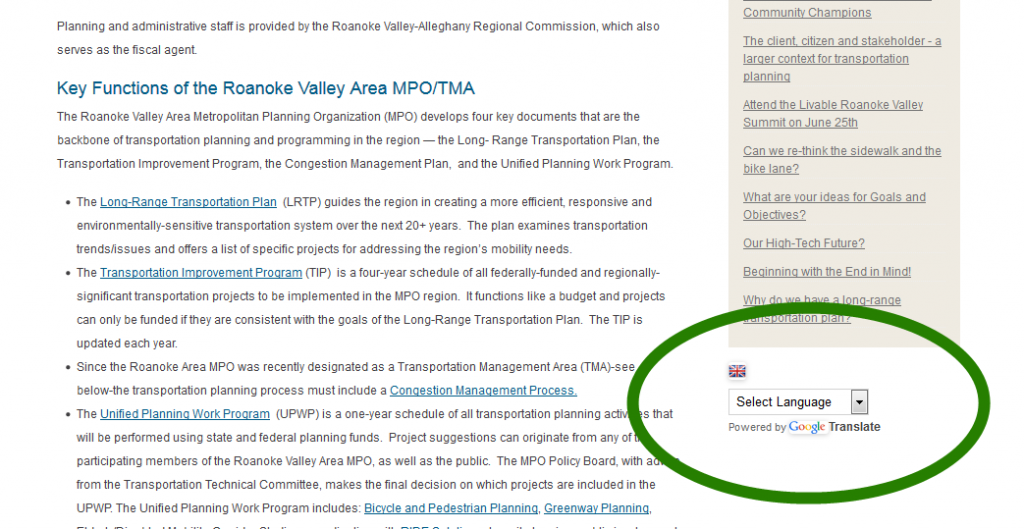
Thanks to advances in neural machine learning, you can now translate entire websites quickly using tools like ConveyThis. Automated translation provides a cost-effective starting point for creating a multilingual website.
Advantages of Automated Translation:
- Speed: Machine translation is near-instant, allowing your website to go live in multiple languages within minutes.
- Cost-Effectiveness: Automated translation is significantly cheaper than manual methods, with costs as low as $0.004 per word.
- Ease of Setup: Platforms like ConveyThis offer a simple 5-minute setup process to get your site multilingual without technical expertise.
However, automated translations alone are not enough for professional results. They lack SEO capabilities and may produce errors or unnatural phrasing. This is where human refinement becomes essential.
Step 2: Human Translation for Precision and Cultural Adaptation
Once your website is automatically translated, the next step is to refine the content with human translators. Human intervention ensures accuracy, cultural relevance, and brand consistency.
Options for Human Translation:
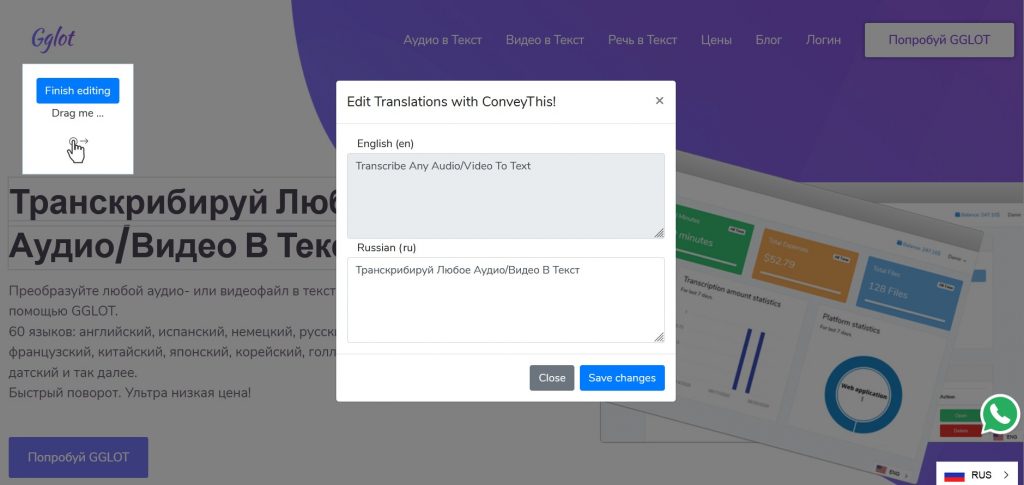
- Self-Editing: If you are bilingual, use ConveyThis’s Visual Editor to make corrections and improve translations yourself.
- Hire Professional Translators: For complex or multi-language projects, hire experts using ConveyThis’s online ordering feature. Professional linguists can handle languages like Arabic, German, Japanese, Korean, Russian, and more.
Why Human Refinement Matters:
- Eliminates Errors: Fixes inaccuracies in machine translations.
- Improves Readability: Ensures natural phrasing and tone.
- Cultural Relevance: Adapts content to the preferences of your target audience.
Step 3: Optimizing for Multilingual SEO
One of the biggest advantages of using a platform like ConveyThis is its focus on SEO optimization for multilingual websites.
Key SEO Features:
- HREFLANG Tags: Help search engines identify language versions of your pages.
- Localized URLs: Create SEO-friendly URLs for each language (e.g.,
example.com/frfor French). - Meta Data Translation: Automatically translates meta titles, descriptions, and alt text for better search engine rankings.
This ensures your translated content is not only accurate but also discoverable, driving organic traffic from global markets.
Step 4: Additional Features for Customization
Exclude Pages from Translation:
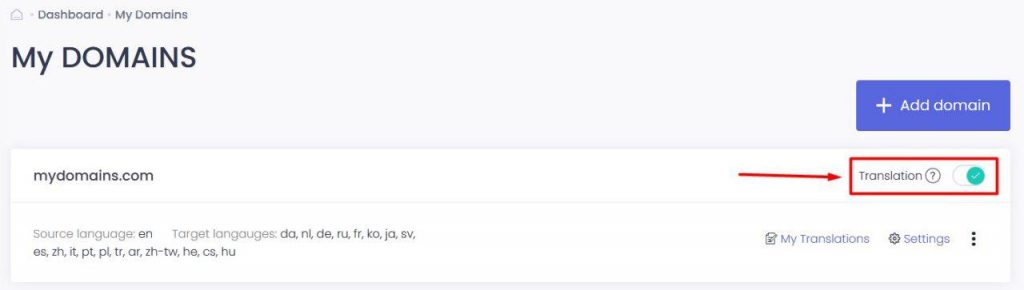
Not every page needs to be translated. ConveyThis allows you to exclude specific pages, reducing costs and ensuring sensitive or unnecessary content remains untranslated.
Turn Translations On or Off:
Easily manage your multilingual site by toggling automatic translations on or off with a simple switch.
Platform Compatibility:
ConveyThis integrates seamlessly with platforms like:
- WordPress (including plugins for SEO benefits)
- Shopify
- Weebly
- Wix
- Squarespace
This makes it an ideal solution for businesses across various industries.
Alternatives: Multiple Sites vs. Multilingual Integration
When creating a multilingual website, businesses often face a crucial decision: should they build separate websites for each language or integrate multilingual functionality into a single site? While maintaining individual sites for each language may initially seem straightforward, it often leads to significant challenges in scalability, maintenance, and overall efficiency. Here, we explore the pros and cons of each approach and why multilingual integration is typically the smarter choice.
Separate Websites for Each Language
Some organizations choose to create distinct websites for each language or region. For instance, they might have separate domains like example.fr for French and example.de for German. While this approach offers certain advantages, it also introduces substantial drawbacks.
Advantages:
- Region-Specific Customization:
Separate websites allow for highly tailored content and user experiences specific to a country or region. You can localize visuals, products, and even marketing strategies. - Independent Performance Tracking:
Each site operates independently, making it easier to monitor specific regional performance without interference from other markets. - Legal Compliance:
Individual websites can be fully tailored to meet local regulatory requirements, such as data storage laws or accessibility standards.
Drawbacks:
- Higher Development and Maintenance Costs:
Managing multiple websites requires separate hosting, design updates, and regular maintenance for each domain, significantly increasing expenses. - Fragmented Analytics:
Consolidating insights from separate sites can be challenging, complicating efforts to track user behavior and website performance across regions. - Reduced SEO Efficiency:
Each website must build its own SEO authority, often competing with other language versions of the same content. This can dilute your brand’s online visibility. - Limited Scalability:
Adding new languages requires building entirely new sites, which is time-consuming and resource-intensive.
Integrated Multilingual Functionality
Integrating multilingual capabilities into a single website allows businesses to serve diverse language audiences from one centralized platform. Platforms like ConveyThis make this approach simple, efficient, and highly scalable.
Advantages:
Cost Efficiency:
With a single site, you avoid duplicating infrastructure costs like hosting, design, and backend systems. Translations are managed centrally, reducing overhead.Centralized Management:
Updates to content, design, or functionality need to be made only once, ensuring consistency across all language versions.Consolidated Analytics:
Integrated multilingual sites allow you to track user behavior across languages from a single dashboard. Tools like Google Analytics can provide a unified view of how different regions interact with your content.SEO Benefits:
Platforms like ConveyThis include features like:- Hreflang Tags: Help search engines understand language-specific content.
- Localized URLs: Subdirectories (e.g.,
example.com/fr) or subdomains (fr.example.com) improve search engine rankings for specific regions while consolidating SEO authority.
Scalability:
Adding a new language is straightforward with multilingual platforms. The process is automated, reducing time and effort compared to creating an entirely new website.Consistent Branding:
Multilingual integration ensures that your site maintains the same branding, look, and feel across all languages, offering a cohesive user experience.
Why Multilingual Integration is a Better Solution
Tools like ConveyThis simplify the process of creating and managing a multilingual website by providing:
- Automated Translation: Quickly translate an entire site with neural machine translation.
- Customization Options: Refine translations manually or hire professional linguists for critical content.
- SEO Integration: Ensure translated pages are indexed correctly for maximum visibility.
- Platform Compatibility: Seamlessly integrate with CMS platforms like WordPress, Shopify, Wix, and more.
Example of Efficiency:
Imagine managing a global eCommerce website with 10 languages. Using separate sites, every product update or promotion would need to be applied individually to each site—a logistical nightmare. With multilingual integration, updates are made once and automatically synced across all languages, saving time and resources.
When Separate Sites Might Make Sense
In rare cases, maintaining separate websites may be justified, such as:
- Highly Specialized Markets: If regional content or products are drastically different, such as in industries like real estate or legal services.
- Legal or Regulatory Restrictions: Some regions may impose requirements that necessitate separate infrastructure.
- Distinct Branding Strategies: When a brand’s identity or marketing approach varies significantly across regions.
Even in these cases, businesses can often achieve the same goals with a robust multilingual platform and careful customization.
Additional Considerations for Multilingual Websites
Creating a multilingual website requires careful planning to ensure a seamless experience for users worldwide. Beyond translation and localization, there are several technical and regulatory aspects to consider. Here’s an expanded look at key considerations to ensure your multilingual site performs optimally and complies with global standards.
1. Mobile Compatibility
In today’s mobile-first world, ensuring your multilingual website is fully responsive on mobile devices is critical. Mobile compatibility isn’t just a convenience—it’s a necessity for reaching users in regions where smartphones are the primary means of internet access.
Key Considerations:
- Responsive Design: Your website should adapt to various screen sizes and orientations. Ensure that translated text fits neatly within mobile layouts, as some languages (e.g., German or Finnish) may expand text significantly.
- Performance Optimization: Optimize your site for speed on mobile devices by compressing images, using efficient coding practices, and leveraging Content Delivery Networks (CDNs).
- Mobile SEO: Ensure that your mobile versions of translated pages are properly indexed by search engines. Use tools like Google’s Mobile-Friendly Test to identify issues.
- App Localization: If your business also uses mobile apps, ensure that these apps are localized alongside your website. Platforms like ConveyThis can help synchronize content across both.
2. Testing Across Regions
Global audiences use a diverse range of devices, browsers, and internet speeds, making testing across regions essential for delivering a consistent user experience.
Key Testing Steps:
- Browser Compatibility: Test your site on popular browsers like Chrome, Safari, Firefox, and Edge to ensure proper rendering of multilingual content.
- Regional Devices: Check compatibility on devices popular in specific regions. For example:
- iOS and Android devices in North America and Europe.
- Xiaomi or Huawei devices in China.
- Internet Speeds: Optimize your site for varying internet speeds. For instance, in regions with slower connections, ensure that images and videos load efficiently.
- Geolocation Accuracy: Test features like currency display and localized content to ensure accuracy based on users’ locations.
Tools for Regional Testing:
- BrowserStack: Allows testing on different devices and browsers remotely.
- Geolocation VPNs: Simulate browsing from different regions to verify localized content and features.
3. Legal Compliance
Adhering to local legal requirements is critical for operating a multilingual website, especially if you’re targeting regions with strict regulations regarding online content and user rights.
Common Legal Requirements:
- Language-Specific Legal Documents: Certain regions mandate that legal documents like terms and conditions, privacy policies, and disclaimers be available in the local language. For example:
- The European Union’s GDPR requires data protection information to be accessible in the user’s language.
- Canada’s Official Languages Act mandates content in both English and French.
- Accessibility Standards: Ensure your multilingual website meets accessibility laws such as the Web Content Accessibility Guidelines (WCAG) or regional standards like the Americans with Disabilities Act (ADA) in the U.S.
- Consumer Protection Laws: Many regions require transparency in product descriptions, pricing, and return policies. Ensure these are accurately translated and localized.
- Tax and Billing Compliance: Localize billing information, including tax details, in compliance with local laws.
How to Achieve Compliance:
- Hire Legal Translators: Use professional translators experienced in legal content to ensure accuracy.
- Work with Regional Experts: Consult local legal advisors to confirm compliance with regional regulations.
- Regular Updates: Monitor changes in legal requirements in your target markets and update your site accordingly.
Conclusion: Is Translating Your Website Worth It?
Translating your website is an investment that can open your business to new markets and significantly boost global reach. While costs depend on factors like word count, complexity, and the languages involved, solutions like ConveyThis offer affordable and scalable options for businesses of all sizes.
To determine your costs:
- Calculate your website’s word count using tools like WebsiteWordCalculator.com.
- Multiply by per-word rates for machine or human translations.
- Factor in additional costs for localization, SEO, and technical adjustments.
By leveraging modern technologies and strategic planning, you can create a multilingual website that drives engagement, improves user experience, and generates higher revenue—without breaking the bank. If you’re ready to start, contact us for a free price estimate or try ConveyThis’s free plan today!
Additional Resources:
- ConveyThis Integrations to explore compatibility with WordPress.
- How to Translate WordPress for more guidance.
- Help Guide for Translating WordPress Websites for step-by-step support.












;fill-opacity:1;'%20d='M%2019.511719%2039.964844%20C%208.304688%2039.964844%200%2031.289062%200%2020.324219%20L%200%2020.230469%20C%200%209.363281%208.160156%200.46875%2019.847656%200.46875%20C%2027.023438%200.46875%2031.320312%202.878906%2034.847656%206.375%20L%2029.519531%2012.492188%20C%2026.59375%209.820312%2023.59375%208.179688%2019.800781%208.179688%20C%2013.390625%208.179688%208.761719%2013.53125%208.761719%2020.085938%20L%208.761719%2020.203125%20C%208.761719%2026.757812%2013.273438%2032.203125%2019.800781%2032.203125%20C%2024.144531%2032.203125%2026.808594%2030.46875%2029.808594%2027.722656%20L%2035.136719%2033.121094%20C%2031.199219%2037.335938%2026.855469%2039.964844%2019.511719%2039.964844%20'/%3e%3cpath%20style='%20stroke:none;fill-rule:nonzero;fill:rgb(26.274511%25,42.352942%25,94.901961%25);fill-opacity:1;'%20d='M%2035.878906%200.0351562%20L%2044.136719%200.0351562%20L%2044.136719%2039.867188%20L%2035.878906%2039.867188%20Z%20M%2035.878906%200.0351562%20'/%3e%3cpath%20style='%20stroke:none;fill-rule:nonzero;fill:rgb(26.274511%25,42.352942%25,94.901961%25);fill-opacity:1;'%20d='M%2059.472656%2016.15625%20C%2056.039062%2016.15625%2053.808594%2018.613281%2053.160156%2022.375%20L%2065.617188%2022.375%20C%2065.113281%2018.664062%2062.953125%2016.15625%2059.472656%2016.15625%20M%2073.535156%2027.578125%20L%2053.28125%2027.578125%20C%2054.097656%2031.335938%2056.710938%2033.3125%2060.40625%2033.3125%20C%2063.191406%2033.3125%2065.183594%2032.445312%2067.464844%2030.300781%20L%2072.191406%2034.492188%20C%2069.480469%2037.867188%2065.566406%2039.941406%2060.289062%2039.941406%20C%2051.527344%2039.941406%2045.070312%2033.769531%2045.070312%2024.832031%20L%2045.070312%2024.710938%20C%2045.070312%2016.347656%2051%209.480469%2059.472656%209.480469%20C%2069.191406%209.480469%2073.65625%2017.074219%2073.65625%2025.363281%20L%2073.65625%2025.457031%20C%2073.65625%2026.300781%2073.609375%2026.808594%2073.535156%2027.578125%20'/%3e%3cpath%20style='%20stroke:none;fill-rule:nonzero;fill:rgb(26.274511%25,42.352942%25,94.901961%25);fill-opacity:1;'%20d='M%2089.375%2039.796875%20L%2081.863281%2039.796875%20L%2070.390625%2010.324219%20L%2079.152344%2010.324219%20L%2085.679688%2029.914062%20L%2092.257812%2010.324219%20L%20100.847656%2010.324219%20Z%20M%2089.375%2039.796875%20'/%3e%3cpath%20style='%20stroke:none;fill-rule:nonzero;fill:rgb(26.274511%25,42.352942%25,94.901961%25);fill-opacity:1;'%20d='M%20111.550781%2016.15625%20C%20108.121094%2016.15625%20105.886719%2018.613281%20105.238281%2022.375%20L%20117.695312%2022.375%20C%20117.191406%2018.664062%20115.03125%2016.15625%20111.550781%2016.15625%20M%20125.617188%2027.578125%20L%20105.359375%2027.578125%20C%20106.175781%2031.335938%20108.792969%2033.3125%20112.488281%2033.3125%20C%20115.246094%2033.3125%20117.265625%2032.445312%20119.542969%2030.300781%20L%20124.273438%2034.492188%20C%20121.558594%2037.867188%20117.648438%2039.941406%20112.367188%2039.941406%20C%20103.609375%2039.941406%2097.152344%2033.769531%2097.152344%2024.832031%20L%2097.152344%2024.710938%20C%2097.152344%2016.347656%20103.078125%209.480469%20111.550781%209.480469%20C%20121.273438%209.480469%20125.734375%2017.074219%20125.734375%2025.363281%20L%20125.734375%2025.457031%20C%20125.734375%2026.300781%20125.6875%2026.808594%20125.617188%2027.578125%20'/%3e%3cpath%20style='%20stroke:none;fill-rule:nonzero;fill:rgb(26.274511%25,42.352942%25,94.901961%25);fill-opacity:1;'%20d='M%20143.566406%2018.757812%20C%20138.070312%2018.757812%20134.710938%2022.085938%20134.710938%2029.074219%20L%20134.710938%2039.867188%20L%20126.457031%2039.867188%20L%20126.457031%2010.613281%20L%20134.710938%2010.613281%20L%20134.710938%2016.519531%20C%20136.390625%2012.46875%20139.128906%209.867188%20144%2010.085938%20L%20144%2018.757812%20Z%20M%20143.566406%2018.757812%20'/%3e%3c/g%3e%3c/svg%3e)




;fill-opacity:1;'%20d='M%20144.558594%2039.894531%20L%20155.4375%209.839844%20C%20155.4375%209.839844%20147.28125%209.839844%20139.121094%2011.515625%20L%20128.867188%2039.894531%20Z%20M%20142.675781%201.78125%20L%20140.585938%207.539062%20C%20148.738281%205.863281%20156.902344%205.863281%20156.902344%205.863281%20L%20158.992188%200.105469%20C%20158.992188%200.105469%20150.832031%200.105469%20142.675781%201.78125%20M%2085.980469%2032.773438%20C%2090.898438%2033.71875%2095.914062%2034.136719%20101.039062%2034.136719%20C%20106.375%2034.136719%20110.140625%2032.984375%20110.554688%2029.320312%20C%20110.765625%2027.640625%20109.089844%2026.382812%20106.167969%2024.707031%20C%20102.816406%2022.824219%2099.894531%2021.878906%2096.960938%2019.886719%20C%2094.03125%2017.898438%2092.78125%2014.859375%2093.71875%2011.507812%20C%2094.871094%207.636719%2097.585938%205.4375%20101.664062%203.34375%20C%20106.480469%200.9375%20110.242188%20-0.0078125%20119.550781%20-0.0078125%20C%20125.40625%20-0.0078125%20131.054688%200.515625%20136.597656%201.667969%20L%20134.609375%207.113281%20C%20129.691406%206.167969%20124.675781%205.75%20119.550781%205.75%20C%20114.214844%205.75%20110.453125%206.90625%20110.035156%2010.570312%20C%20109.828125%2012.246094%20111.5%2013.503906%20114.425781%2015.179688%20C%20117.773438%2017.066406%20120.695312%2018.011719%20123.628906%2020%20C%20126.558594%2021.988281%20127.808594%2025.027344%20126.871094%2028.378906%20C%20125.71875%2032.253906%20123.003906%2034.449219%20118.925781%2036.542969%20C%20114.113281%2038.949219%20110.347656%2039.894531%20101.039062%2039.894531%20C%2095.183594%2039.894531%2089.535156%2039.375%2083.992188%2038.21875%20Z%20M%2062.34375%2039.894531%20L%2071.441406%2014.867188%20C%2074.476562%206.488281%2063.390625%209.527344%2060.875%2011.515625%20C%2058.890625%2012.984375%2055.332031%2016.441406%2054.078125%2020.105469%20L%2046.859375%2040%20L%2031.175781%2040%20L%2040.273438%2014.867188%20C%2043.308594%206.488281%2032.222656%209.527344%2029.710938%2011.515625%20C%2027.722656%2012.984375%2024.167969%2016.441406%2022.910156%2020.105469%20L%2015.691406%2040%20L%200.0078125%2040%20L%2014.441406%200.105469%20C%2019.464844%200.105469%2022.179688%201.257812%2024.375%203.457031%20C%2025.207031%204.289062%2025.734375%205.339844%2026.046875%206.496094%20C%2028.980469%204.714844%2031.589844%203.351562%2033.371094%202.726562%20C%2036.613281%201.46875%2040.691406%200.105469%2045.714844%200.105469%20C%2050.734375%200.105469%2053.453125%201.257812%2055.644531%203.457031%20C%2056.480469%204.289062%2057.007812%205.339844%2057.320312%206.496094%20C%2060.25%204.714844%2062.863281%203.351562%2064.640625%202.726562%20C%2067.886719%201.46875%2071.964844%200.113281%2076.984375%200.113281%20C%2082.007812%200.113281%2084.722656%201.265625%2086.917969%203.464844%20C%2089.21875%205.660156%2089.113281%209.742188%2088.28125%2012.050781%20L%2078.027344%2039.902344%20L%2062.34375%2039.902344%20Z%20M%2062.34375%2039.894531%20'/%3e%3c/g%3e%3c/svg%3e)

;fill-opacity:1;'%20d='M%202.453125%209.882812%20L%202.453125%2012.851562%20L%207.304688%2012.851562%20L%2016.800781%2030.734375%20L%2028.488281%2030.734375%20L%2037.980469%2012.824219%20L%2042.832031%2012.792969%20L%2042.84375%209.882812%20L%2028.328125%209.882812%20L%2028.328125%2012.804688%20L%2032.195312%2012.804688%20L%2025.488281%2025.515625%20L%2018.234375%2012.847656%20L%2023.527344%2012.824219%20L%2023.515625%209.882812%20Z%20M%2096.097656%209.882812%20L%2096.097656%2012.851562%20L%20100.949219%2012.851562%20L%20110.445312%2030.734375%20L%20122.128906%2030.734375%20L%20131.625%2012.824219%20L%20136.476562%2012.792969%20L%20136.484375%209.882812%20L%20121.972656%209.882812%20L%20121.972656%2012.804688%20L%20125.835938%2012.804688%20L%20119.132812%2025.515625%20L%20111.878906%2012.847656%20L%20117.167969%2012.824219%20L%20117.160156%209.882812%20Z%20M%2072.222656%209.882812%20L%2072.222656%2012.851562%20L%2077.078125%2012.851562%20L%2077.082031%2027.453125%20L%2071.96875%2027.453125%20L%2071.96875%2030.707031%20L%2077.085938%2030.734375%20L%20101.3125%2030.734375%20L%20101.3125%2021.027344%20L%2098.15625%2021.027344%20C%2097.984375%2026.167969%2093.542969%2027.457031%2091.675781%2027.457031%20C%2089.960938%2027.457031%2086.640625%2027.453125%2086.640625%2027.453125%20L%2086.640625%2012.847656%20L%2091.417969%2012.824219%20L%2091.410156%209.882812%20Z%20M%2055.890625%209.285156%20C%2047.644531%209.285156%2040.960938%2014.214844%2040.960938%2020.292969%20C%2040.960938%2026.375%2047.644531%2031.304688%2055.890625%2031.304688%20C%2064.136719%2031.304688%2070.824219%2026.375%2070.824219%2020.292969%20C%2070.824219%2014.214844%2064.136719%209.285156%2055.890625%209.285156%20Z%20M%2055.675781%2028.0625%20C%2052.769531%2028.0625%2050.414062%2024.566406%2050.414062%2020.25%20C%2050.414062%2015.933594%2052.769531%2012.4375%2055.675781%2012.4375%20C%2058.582031%2012.4375%2060.941406%2015.933594%2060.941406%2020.25%20C%2060.941406%2024.566406%2058.582031%2028.0625%2055.675781%2028.0625%20Z%20M%20149.539062%208.921875%20C%20141.289062%208.921875%20134.605469%2013.933594%20134.605469%2020.113281%20C%20134.605469%2026.292969%20141.289062%2031.300781%20149.539062%2031.300781%20C%20157.78125%2031.300781%20164.46875%2026.292969%20164.46875%2020.113281%20C%20164.46875%2013.933594%20157.78125%208.921875%20149.539062%208.921875%20Z%20M%20149.324219%2028.007812%20C%20146.417969%2028.007812%20144.0625%2024.453125%20144.0625%2020.066406%20C%20144.0625%2015.679688%20146.417969%2012.125%20149.324219%2012.125%20C%20152.230469%2012.125%20154.585938%2015.679688%20154.585938%2020.066406%20C%20154.585938%2024.453125%20152.230469%2028.007812%20149.324219%2028.007812%20Z%20M%20149.324219%2028.007812%20'/%3e%3c/g%3e%3c/svg%3e)